About me
I am a neuroscientist and Associate Professor interested in how we experience ourselves as embodied individuals and how our bodies connect us to other people. My work brings together neuroscience, psychology, and perspectives from philosophy to explore the relationship between bodily experience, self-awareness, and social interaction.
A central question in my research is how the sense of being a distinct self emerges from ongoing interactions between the brain, the body, and the social world. I am particularly interested in the role of touch and bodily signals in shaping our experience of ourselves and our relationships with others.
Research
My research focuses on the bodily self: how we experience our bodies as our own, how we distinguish ourselves from others, and how bodily experience is shaped by social interaction.
The bodily self and self-awareness
How does the brain create and maintain the experience of being a self? I investigate the bodily processes that contribute to self-awareness and our sense of ownership over our bodies.
Touch and social interaction
Touch is more than a way of sensing the external world. It can also shape how we experience ourselves and others. My work explores the roles of affective touch, self-touch, and social touch in bodily awareness, interpersonal connection, and emotional regulation.
Embodiment and mental health
Our experience of ourselves is closely connected to bodily and emotional processes. I am interested in how changes in bodily self-experience relate to mental health and what they can reveal about the relationship between brain, body, and mind.
Across these areas, I combine empirical research with broader theoretical questions about what it means to experience oneself as an embodied and social being.
My research has been supported by the European Research Council, the Swedish Research Council (Vetenskapsrådet), Svenska Läkaresällskapet, Forte, Region Östergötland, and other national and international funding bodies. More information about our ongoing projects can be found on the The Boehme Lab page.
Writing: Books and other publications
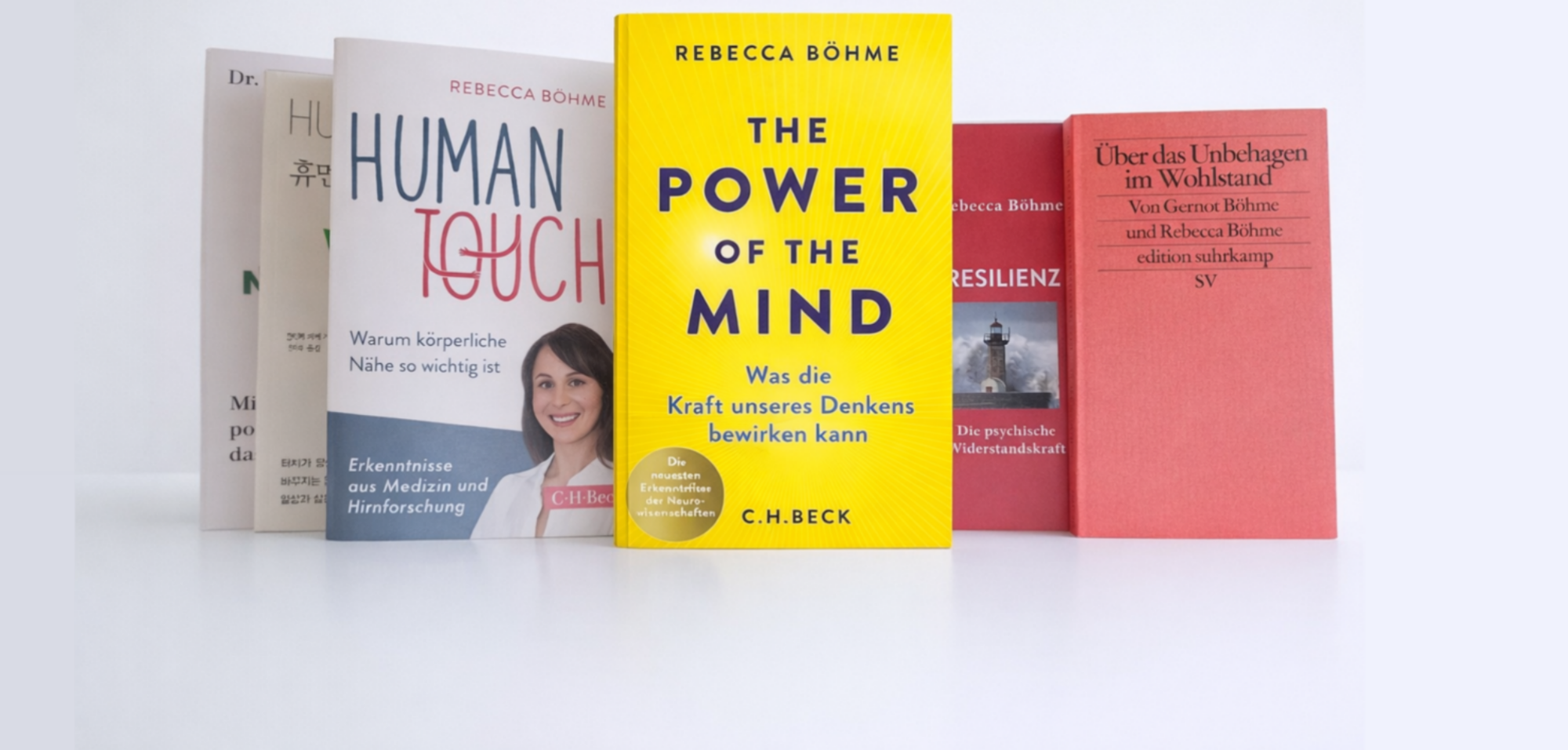
Alongside my scientific articles, I write books and other texts that explore the relationship between the body, the self, and social experience. My writing aims to connect research in neuroscience and psychology with broader questions about human experience.
My publications include scientific papers, book chapters, and contributions for readers beyond academia. Across these formats, I am interested in making complex ideas accessible without losing their scientific depth.
Academic journey
My academic career has been shaped by an enduring interest in the relationship between bodily experience and the sense of self. Through my research and collaborations, I have developed an interdisciplinary perspective that connects neuroscience with psychology and questions traditionally explored in philosophy.
I am currently an Associate Professor at Linköping University. My research has involved collaborations across disciplines and institutions, bringing together different approaches to understanding bodily awareness, touch, and social interaction.
I studied at the Ruprecht Karls University in Heidelberg and the Max Planck research school in Tübingen. For my PhD at the psychiatry department of Charité Berlin, I received the For Women in Science Award. I worked as a Postdoc at Charité and Humboldt University, Berlin, and at CSAN, Linköping.
Beyond research
I am interested in how scientific ideas travel beyond the boundaries of individual disciplines and contribute to wider conversations about human experience. I value collaborations that bring together different methods and perspectives, as well as opportunities to communicate research to broader audiences.
For collaborations, speaking invitations, or questions about my work, please get in touch.

© Rebecca Böhme, 2026. Unauthorized use and/or duplication of this material without express and written permission from this site’s author and/or owner is prohibited. Excerpts and links may be used, provided that full and clear credit is given to the authors with appropriate and specific direction to the original content.